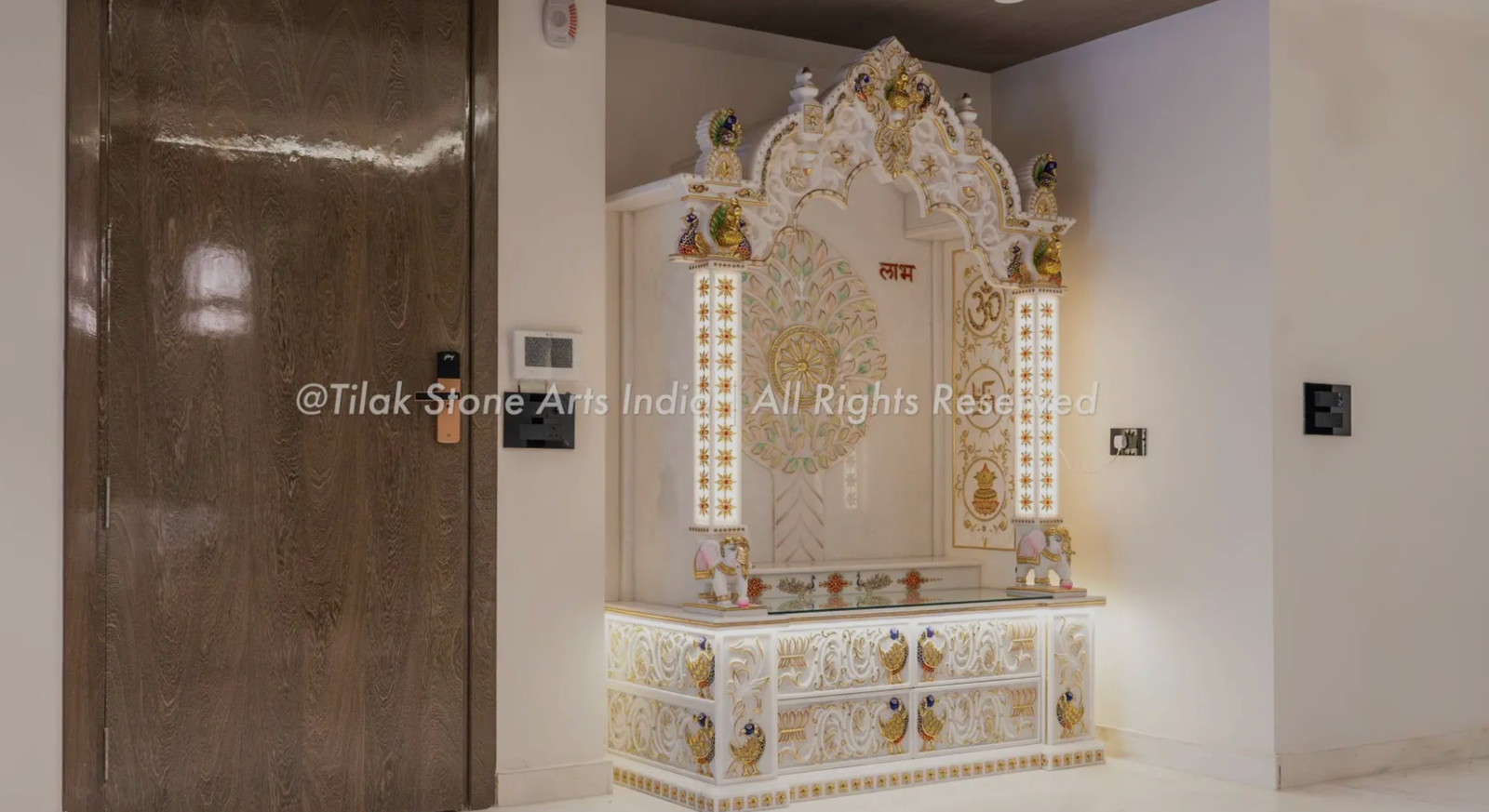
Delhi homes come in every shape and size. A two-bedroom apartment in Dwarka has completely different constraints from a large independent house in Vasant Vihar or a floor in a builder flat in Rohini. Yet across all of these spaces, one thing is consistent: most Hindu families want a dedicated place for daily worship. The home mandir isn’t an afterthought. It’s often the most considered piece in the entire house.
Getting it right takes more thought than most people expect. Size, material, style, placement, and the practical requirements of daily use for the marble temple in Delhi all need to work together. Rush the decision and you end up with something that doesn’t fit the space, doesn’t suit the home’s aesthetic, or simply doesn’t feel the way a prayer space should feel.
Reading Your Space Before Anything Else
The single biggest mistake people make when planning a home mandir is choosing a design before they’ve properly assessed the space it’s going into. The mandir has to work within the room. It cannot be the only thing considered in isolation.
Start with the dimensions. Measure the wall or alcove where the mandir will sit. Note the ceiling height, particularly if you’re considering a tall piece with a shikhara or dome. In older Delhi apartments, ceiling heights can be generous. In newer builder flats, they’re often lower, which limits how tall a piece can realistically go without looking cramped or touching the ceiling.
Think about the room the mandir will live in. A marble temple in Delhi is placed in the living room, a dedicated pooja room, or occasionally in the master bedroom. A living room mandir is visible to guests and needs to complement the overall interior design of the space. A dedicated pooja room gives more freedom, because the entire room is devoted to the purpose and the mandir can be the centrepiece without competing with other furniture.
Floor space and clearance matter too. There needs to be enough room to sit or stand comfortably in front of the mandir during worship, to light diyas without being cramped, and to move around the space without obstruction. A mandir that fits beautifully against a wall but leaves no room for the person worshipping in front of it has missed the point.
See also: What to Check Before Choosing Around Should I Take Mounjaro in The Morning
Size Options And What They’re Suited To
Marble mandirs for home use come in a range of widths, and each width category suits a different kind of space and family requirement.
A three-foot wide mandir is the right starting point for compact apartments or for rooms where the mandir shares wall space with other furniture. It provides a complete, proper worship space without dominating the room. For a nuclear family in a Delhi apartment, this size works well and leaves the surrounding space feeling balanced.
A four-foot wide piece suits mid-sized living rooms and dedicated pooja spaces in standard builder flats. It accommodates a comfortable arrangement of deities, has room for the practical items needed for daily worship, and has visual presence without overwhelming the room.
Five and six-foot wide mandirs are statement pieces. They work in larger homes, in rooms with high ceilings, or in dedicated pooja rooms where the mandir is the entire purpose of the space. In a large independent house or a spacious apartment in South Delhi, a five or six-foot piece creates the kind of sacred focal point that becomes the heart of the home. These larger pieces also allow for more elaborate deity arrangements, more storage for worship items, and more architectural detail in the carving and structure.
The right size isn’t just about what fits. It’s about what’s proportionate. A three-foot mandir in a large room can look insignificant. A six-foot piece in a small room can feel overwhelming. The goal is a piece that feels right for the space, not one that’s simply as large as the budget allows.
Material Choices And Why Marble Stands Apart
Delhi’s climate makes material choice more consequential than it is in other parts of the country. The heat of summer, the humidity of the monsoon, and the temperature drops in winter all affect how different materials age over time.
Wood is the traditional choice for home mandirs and remains popular. It carves beautifully and has warmth in its appearance. The challenge in Delhi’s climate is that wood expands and contracts with temperature and humidity changes. Over years, joints can loosen, surfaces can warp slightly, and the finish can deteriorate if not carefully maintained. A wooden mandir in Delhi requires more ongoing attention than one made from stone.
Marble behaves differently. It doesn’t expand and contract with humidity in the way wood does. It doesn’t warp, split, or require periodic refinishing. The surface remains consistent year after year regardless of the season. For a piece that’s going to be used every day, that durability is genuinely significant.
Vietnam White Marble has become the preferred choice for quality home mandirs. Its whiteness is consistent and bright, it has a natural lustre that responds well to the light of diyas and lamps, and it carves with enough precision for the fine detail work that distinguishes a quality mandir from a mass-produced one. The material also feels inherently appropriate for a sacred space in a way that manufactured or composite materials don’t.
Composite and resin mandirs exist at a lower price point, but the material shows its limitations over time. The finish can dull, details that looked sharp on arrival lose their crispness, and the piece doesn’t age in the dignified way that natural stone does.
Style Decisions: Traditional, Modern And Everything Between
Delhi homes have changed considerably over the last two decades. The interiors of apartments and houses in areas like Greater Kailash, Defence Colony, Punjabi Bagh, and the newer sectors of Dwarka and Dwarka Expressway span a wide range of aesthetics, from traditionally furnished homes to clean, contemporary interiors with minimal decoration.
A mandir needs to work within that aesthetic without looking like it belongs in a different house entirely.
Traditional mandir designs draw directly from temple architecture. Shikharas, arched gopurams, intricate jali screens, floral motifs, and column detailing that references classical North Indian temple style all belong in this category. These designs suit traditionally furnished homes, homes where the pooja room is separate and dedicated, and families who want the mandir to feel architecturally connected to India’s temple-building heritage.
Modern designs approach the same function differently. The spiritual purpose is identical, but the visual language is quieter. Cleaner lines, more restrained carving, wall-mounted formats that take up no floor space, and a palette that works alongside contemporary furniture rather than contrasting with it. For an apartment in a newer development with a modern interior, a contemporary marble mandir can feel more coherent than a traditional temple-style piece would.
There’s a middle ground too. Designs that retain traditional elements like carved columns, a defined inner sanctum for the deity, and appropriate architectural proportions, but express them in a way that’s less ornate and more adaptable to different interiors. These hybrid designs are increasingly popular in Delhi homes because they work across a wider range of spaces without looking out of place.
Deity Placement And The Layout Of The Worship Space
The layout of the mandir, how the interior space is organised and what it can accommodate, is as important as its external appearance.
Think about which deities your family worships and how they’re typically arranged. Some families have a primary deity with secondary idols alongside. Others have photographs of family elders alongside the main deity. Some include multiple forms of the same deity across different occasions. The interior of the mandir needs to accommodate that arrangement comfortably, with each deity given appropriate placement and enough space around them for the worship items needed during daily use.
Storage within the mandir matters significantly in practice. Diyas, agarbatti, camphor, sindoor, flowers, and prayer items need somewhere to live that keeps them organised and accessible without cluttering the worship space. A well-designed mandir incorporates storage thoughtfully, with niches and compartments that serve real daily use rather than just looking decorative.
The Process From Design To Installation In Delhi
For a custom piece or a larger mandir requiring installation rather than simple placement, understanding the process helps manage expectations around timeline and coordination.
The design stage involves finalising dimensions, style, and internal layout based on your space and requirements. For a custom commission, this stage produces detailed drawings that you approve before any carving begins. For a readymade selection, this stage is about confirming that the chosen piece is the right fit for your space.
Production of a marble mandir takes time. The stone has to be worked carefully, the carving done in stages, and the finishing completed to a consistent standard. Rushing this process produces results that show the rush. A realistic timeline from confirmed order to installation in Delhi is something to discuss clearly at the outset rather than assume.
Installation of a large marble mandir in a Delhi apartment or house requires planning around access. Marble is heavy. Large pieces need to be brought in sections and assembled on site, which means the installation process itself is a coordinated effort that benefits from proper preparation of the space beforehand.