In a small sauna room, a traditional electric heater reaches 170 to 190 degrees Fahrenheit but needs a dedicated 240V circuit and multi-sided clearance for its stone load, while infrared panels run cooler at 120 to 140 degrees, often plug into a standard 120V outlet, and mount closer to the wall with less standoff space required. For a tight closet conversion or basement corner, infrared usually wins on ease of install and space efficiency; for someone who wants the higher heat and steam option of classic Finnish bathing, a correctly sized traditional heater is still the better fit despite the extra electrical work.
How Much Room Does Each Heater Type Actually Take Up?
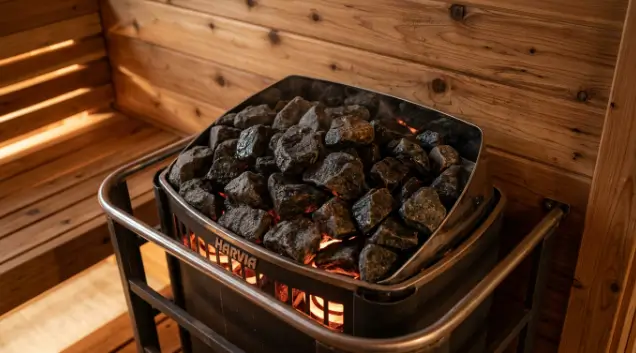
A traditional heater with a stone tray needs clearance on its sides, back, and top per the manufacturer’s installation manual, commonly several inches to a foot depending on the model, which eats into usable space in a room that might only be 4 by 5 feet to begin with. Infrared panels are flatter, mount closer to the wall surface, and typically need less standoff clearance, which frees up bench and floor space in a genuinely small room. When square footage is the binding constraint, this difference alone often decides the choice.
What Electrical Work Does Each Option Require?
A traditional 4.5 to 6kW heater needs a dedicated 240V circuit, which means an electrician running new wire and, in many homes, upgrading panel capacity if it is not already available. Infrared panels in the 1.5 to 3kW range frequently run on a standard 120V, 20-amp circuit, which an existing basement or converted room may already have. For a small-space project on a tighter budget or timeline, skipping the 240V electrical work is a meaningful practical advantage.
How Does Heat Type Affect the Experience in a Tight Room?
Traditional sauna heat warms the air, which in a small enclosed room reaches target temperature relatively quickly since there is less volume to heat, and offers the option of pouring water on the stones for steam. Infrared heat warms the body directly through radiant panels rather than the surrounding air, so the room itself stays cooler even while the person inside feels warm, an effect some people specifically prefer in a small, enclosed space where high ambient heat can feel more intense. Neither is more “authentic” than the other; they are different mechanisms suited to different preferences.
Which Option Has More Long-Term Health Research Behind It?
Traditional Finnish-style sauna bathing has the larger body of long-term research, including cohort studies tying regular high-heat sessions to favorable cardiovascular outcomes over years of habitual use. A Mayo Clinic Proceedings review of the evidence covers this traditional dry-heat exposure specifically. Infrared sauna use has a smaller and newer research base, so someone prioritizing decades of cohort data over convenience should weigh that gap into the decision, even in a small-space context where infrared is otherwise the more practical install.
How Should a Small-Space Buyer Decide?
Start by confirming what electrical service already exists in the room, since that alone may narrow the choice before comfort preferences even come into play. From there, weigh whether the higher heat and steam option of traditional bathing matters enough to justify the extra clearance space and electrical cost, or whether a cooler, easier-install infrared panel fits the room and the budget better. Reviewing heater specs side by side is a reasonable next step, and Sweat Decks lists clearance and voltage requirements for a traditional 6kW model that buyers can compare directly against an infrared alternative before deciding.
What Does a Realistic Small-Room Setup Cost to Run Either Way?
A traditional 6kW heater used for three 30 to 40 minute sessions a week typically runs a few dollars a month in electricity at standard residential rates. Infrared panels draw less power per session given their lower kW rating, so weekly running cost tends to be somewhat lower, though the gap is modest for typical home use. Neither option makes the ongoing electricity cost a major factor in the decision; the bigger cost differences show up in the install itself, not the monthly bill.
What Do Real Small-Room Installs Usually Look Like?
A common small-space setup is a converted closet or an unused corner of a finished basement, somewhere between 12 and 25 square feet of usable floor area once benches are accounted for. In that context, the clearance difference between traditional and infrared heaters becomes very concrete: a traditional heater’s guard clearance might claim a foot or more of wall space that would otherwise hold a second bench or a towel hook, while infrared panels mounted flat against the wall leave that space usable. Owners converting an existing closet also need to confirm the room can handle the moisture and heat cycling over time, since a space not originally built for it may need added insulation or a vapor barrier behind the wall panels regardless of which heater type goes in.
Does the Choice Affect Resale or Future Flexibility?
A traditional heater install, once the 240V circuit is in place, gives a homeowner the option to switch heater brands or upgrade wattage later without redoing the electrical work. An infrared install on a 120V circuit is simpler to set up initially but offers less headroom if a future owner wants to switch to a traditional heater, since that would still require adding the 240V circuit at that point. Neither limitation is a major factor for most buyers, but it is worth a mention for anyone thinking about the room’s use beyond the next several years.
Frequently Asked Questions
Which heater type needs less electrical work in a small space?
Infrared panels typically run in the 1.5 to 3kW range and often work on a standard 120V outlet, while a traditional electric heater in the 4.5 to 6kW range needs a dedicated 240V circuit. For a small room without existing 240V service, infrared usually means less electrical work.
Does a traditional heater need more clearance than infrared panels in a tight room?
Yes, generally. A traditional heater with a stone load needs guard clearance on multiple sides per its installation manual, which uses up usable wall and bench space in a small room. Infrared panels mount flatter against the wall and typically need less standoff clearance.
Which type is quieter and lower maintenance in daily use?
Infrared panels have no moving parts and no stones to replace, so day-to-day maintenance is minimal. A traditional heater needs occasional stone inspection and replacement as stones crack from repeated heat cycling, which is a small but recurring task.
Is one type safer for a small enclosed room than the other?
Both are safe when installed to the manufacturer’s clearance and electrical specifications. The practical difference in a small room is that a traditional heater’s higher surface temperature requires more careful placement relative to benches and walls, while infrared panels run cooler to the touch.
References
- Cardiovascular and Other Health Benefits of Sauna Bathing: A Review of the Evidence, Mayo Clinic Proceedings, 2018.
- Clinical Effects of Regular Dry Sauna Bathing: A Systematic Review, Evidence-Based Complementary and Alternative Medicine, 2018.
- Effects of heat and cold on health, with special reference to Finnish sauna bathing, American Journal of Physiology – Regulatory, Integrative and Comparative Physiology, 2018.
By Nathan Voss